Mushroom Identification Gallery
Browse a curated gallery of mushrooms with AI-generated mushroom ID insights. Each entry in this mushroom identifier collection is designed to help you visually compare species traits with your own finds.
Showing 8 of 74 mushroom species
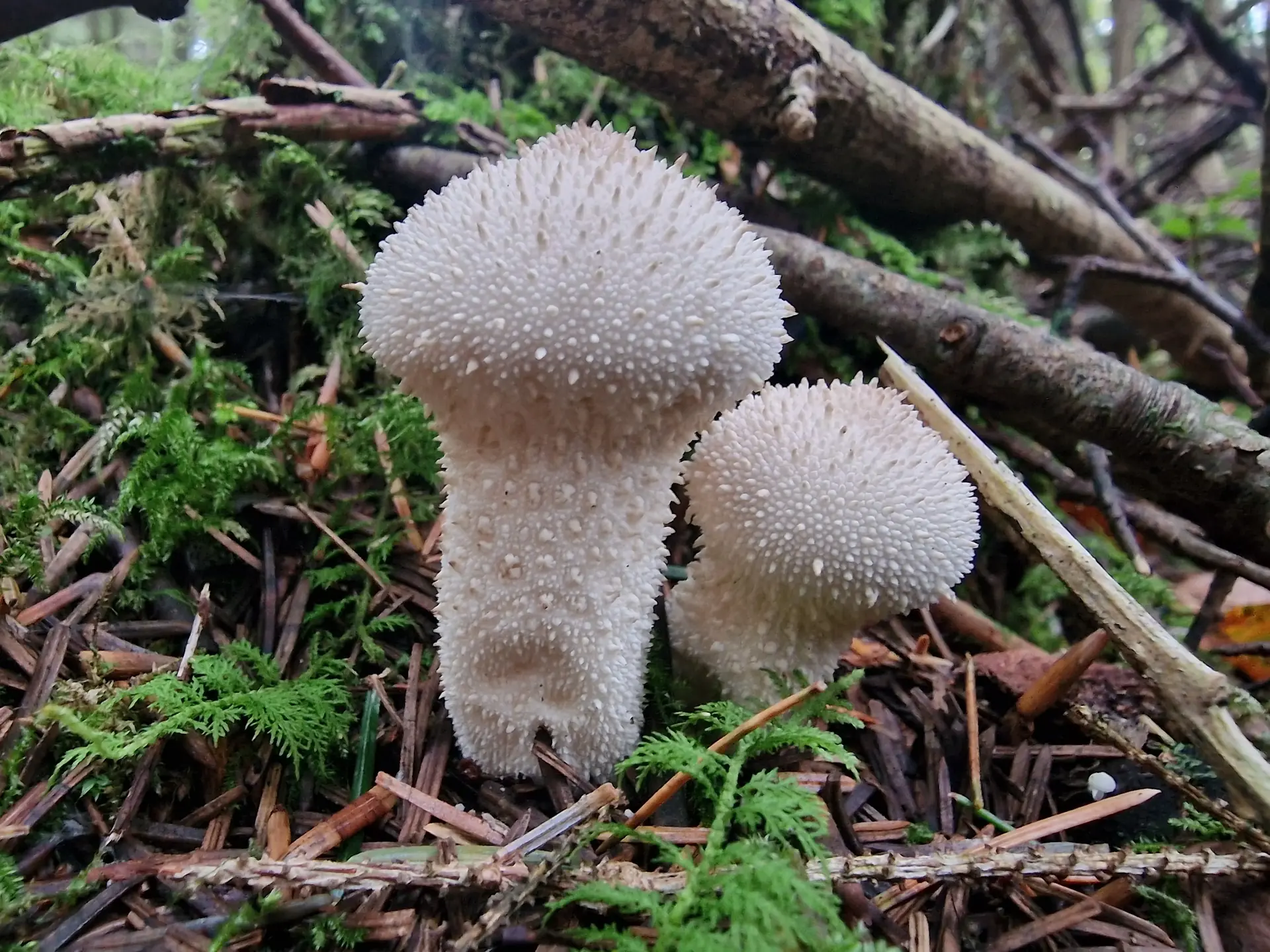
Common Puffball
Lycoperdon perlatum
Pear-shaped fruiting body with distinct sterile base • Surface covered in prominent • conical • detachable white spines • Spines leave a net-like pattern when rubbed off • White when young • maturing to light brown/tan • Grows terrestrially among leaf litter and debris
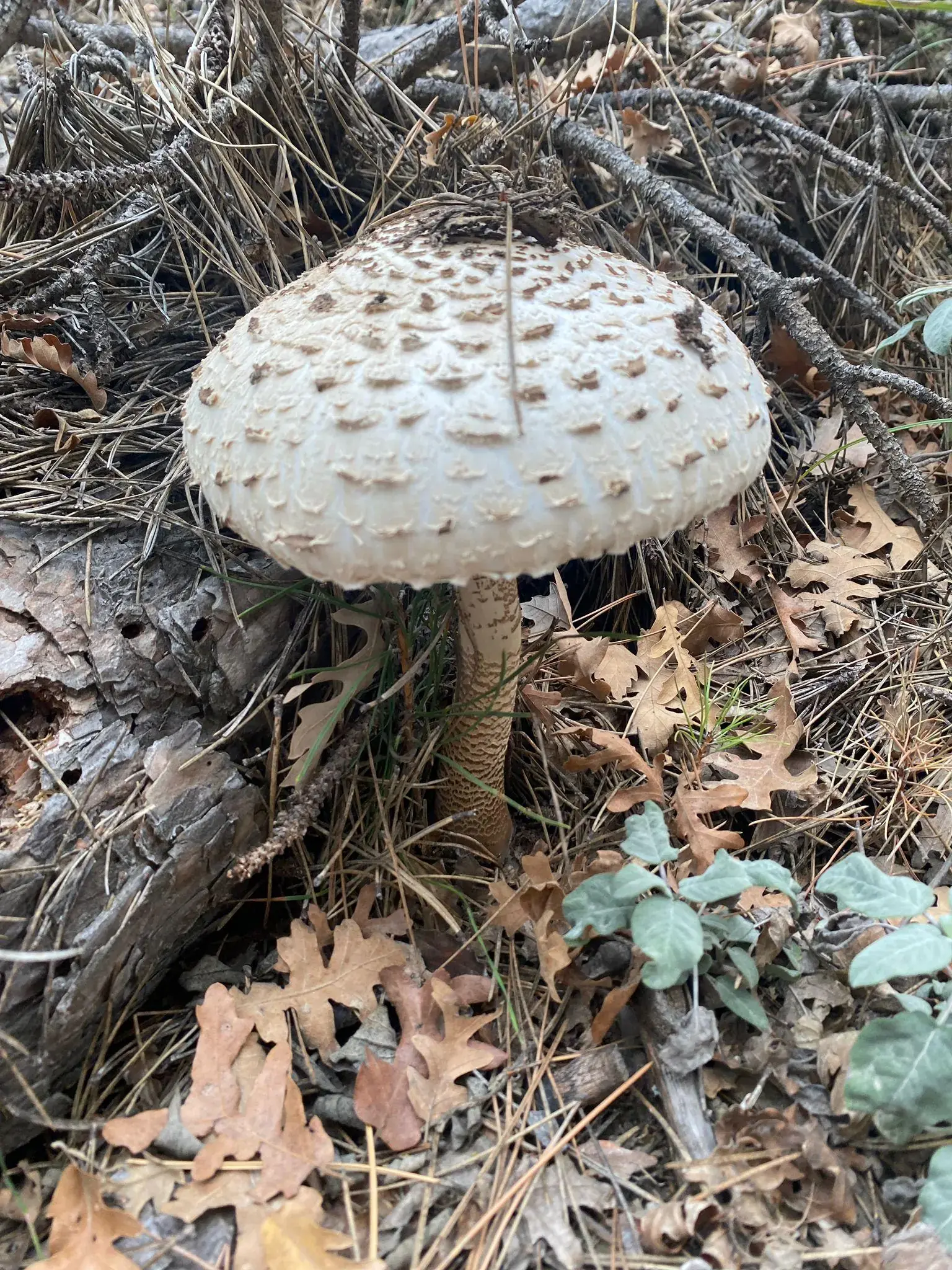
Parasol Mushroom
Macrolepiota procera
Large convex cap with brown scales • Snake-skin pattern on stem • Double • moveable ring • Bulbous base • White flesh
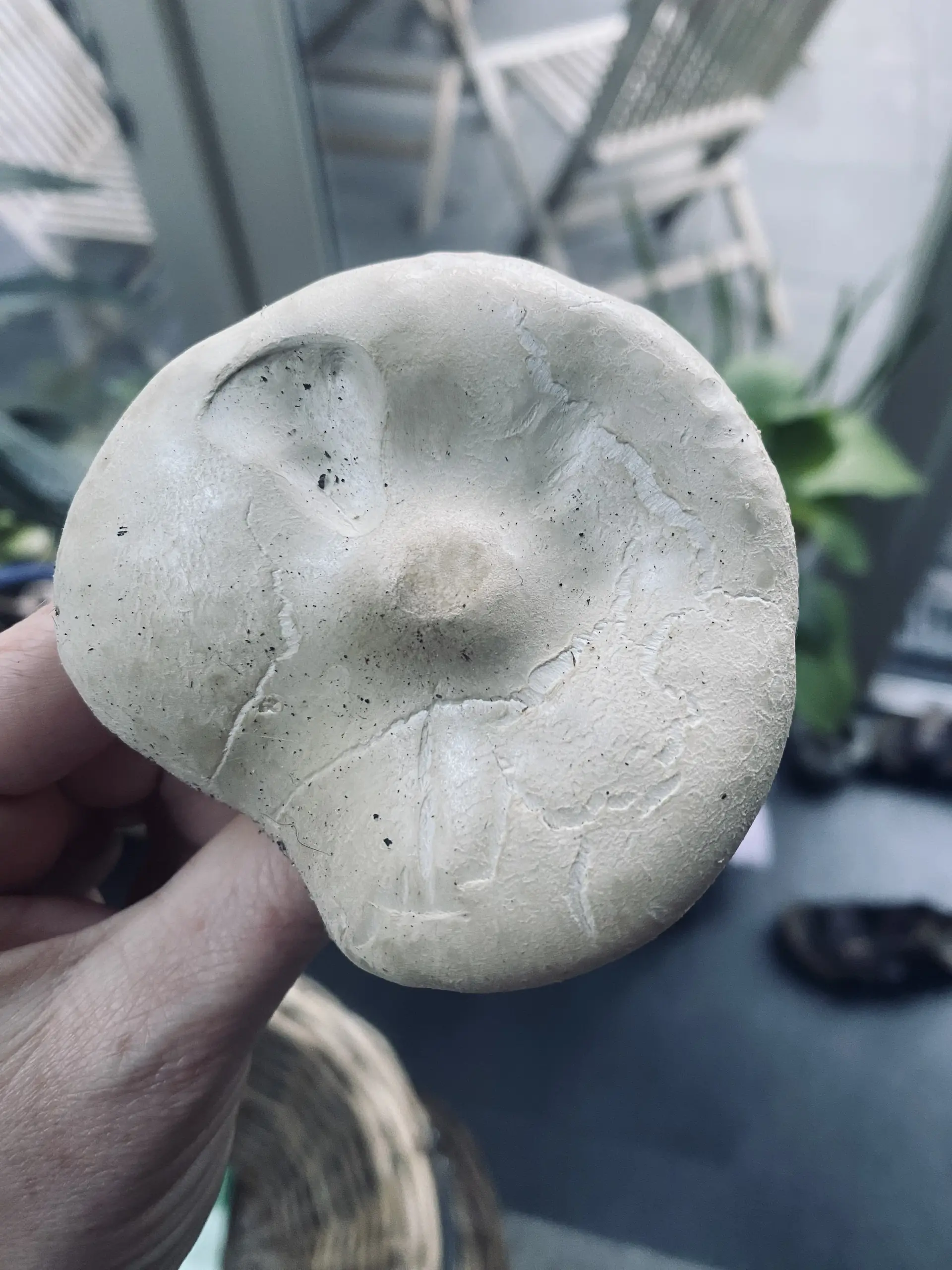
Warty Cavalier
Melanoleuca verrucipes
Whitish to pale cream cap with a slight central depression • Crowded • adnate to slightly decurrent pale gills • Stem distinctly covered in dark brown to blackish scabrous squamules • Fleshy • moderately robust structure with soil attached to base
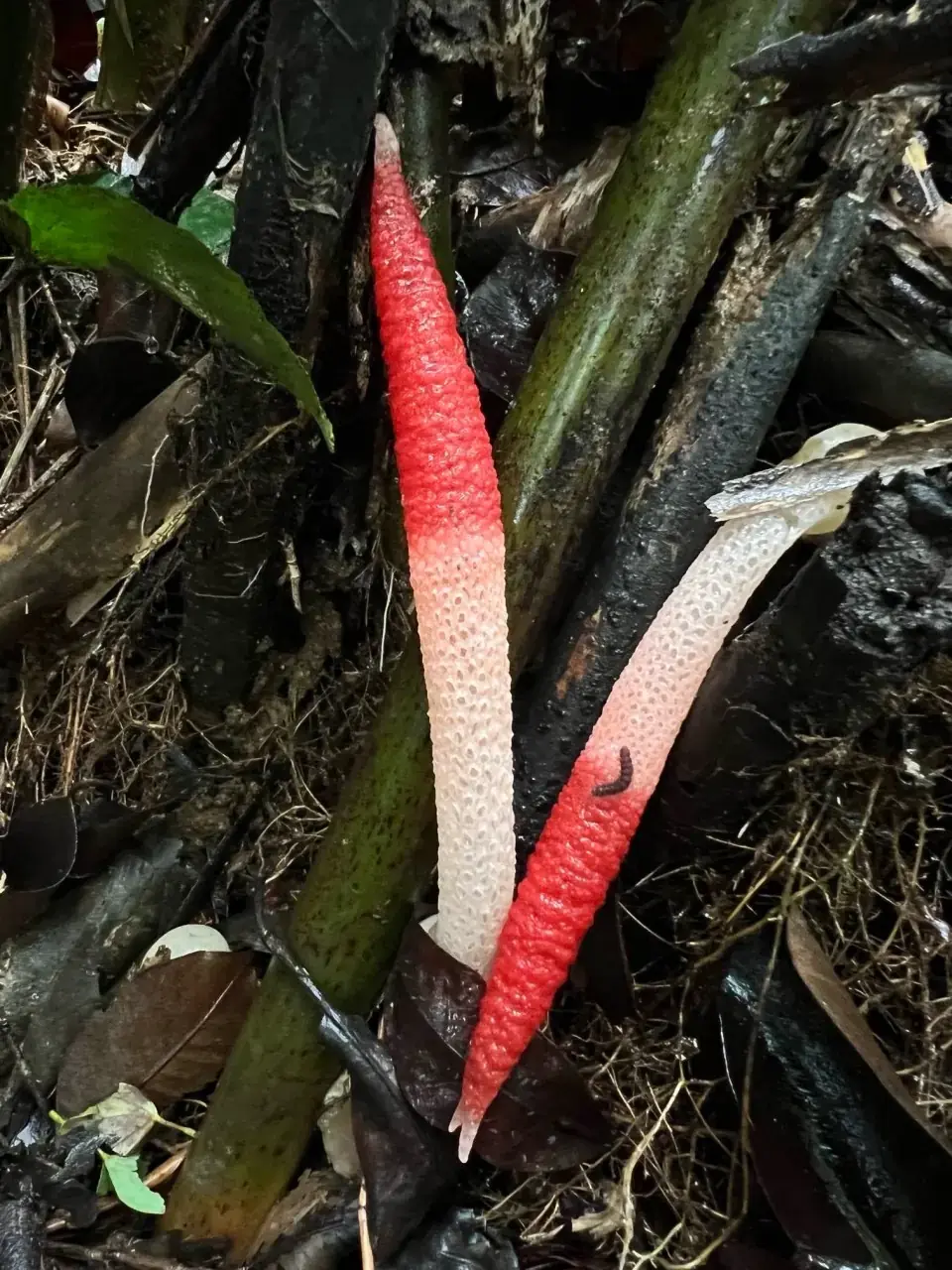
Bamboo Stinkhorn
Mutinus bambusinus
Cylindrical • hollow • tapering stalk (receptaculum) • Vivid red to pinkish-red • highly porous or pitted apex • Pale pink or white lower stalk section • Emerges from organic debris or soil
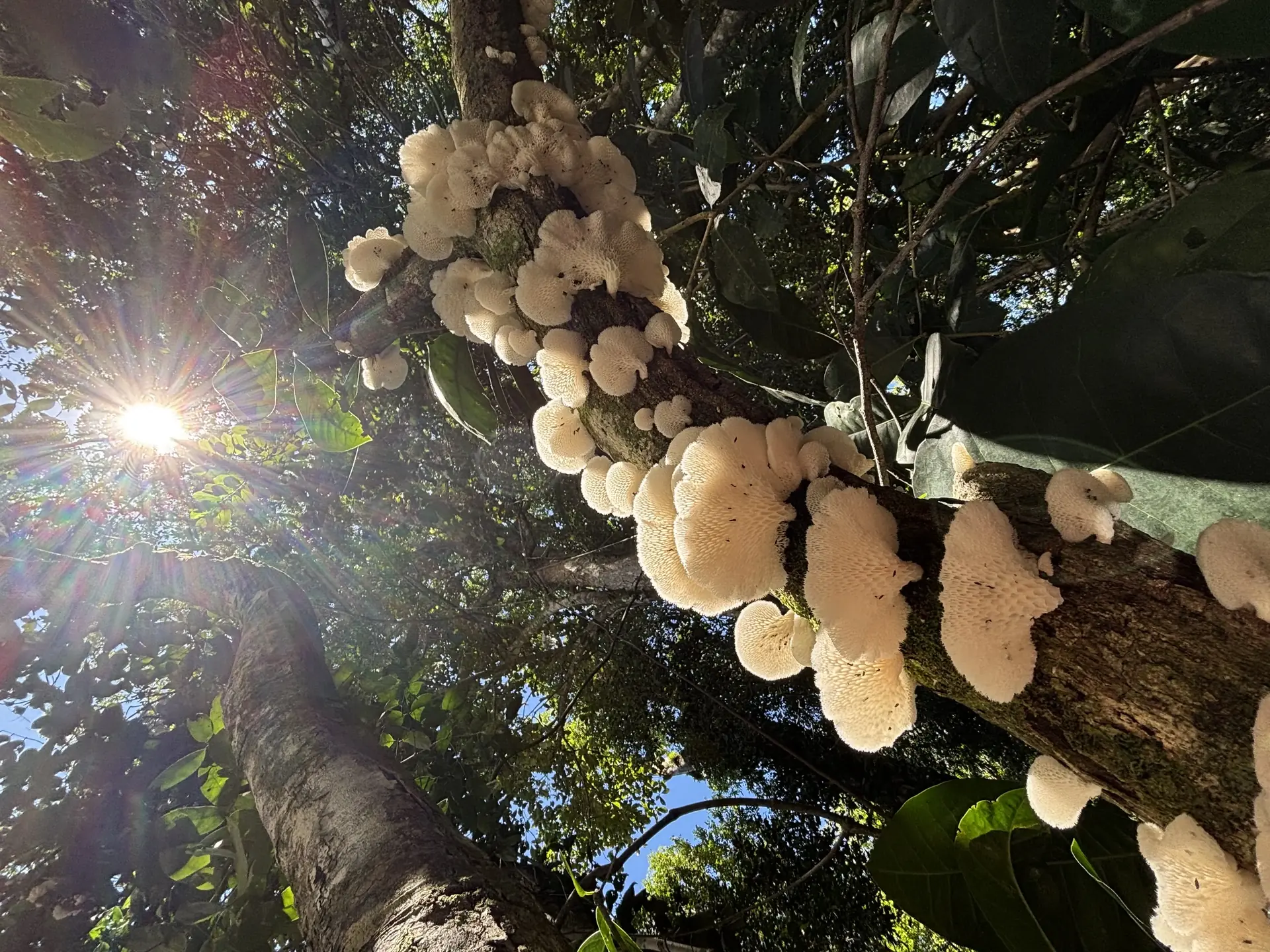
Hexagonal-pored Polypore
Neofavolus alveolaris
Sessile or short-stalked bracket shape • Pore surface composed of large • angular • hexagonal pits • White to pale cream coloration • Growth exclusively on dead hardwood
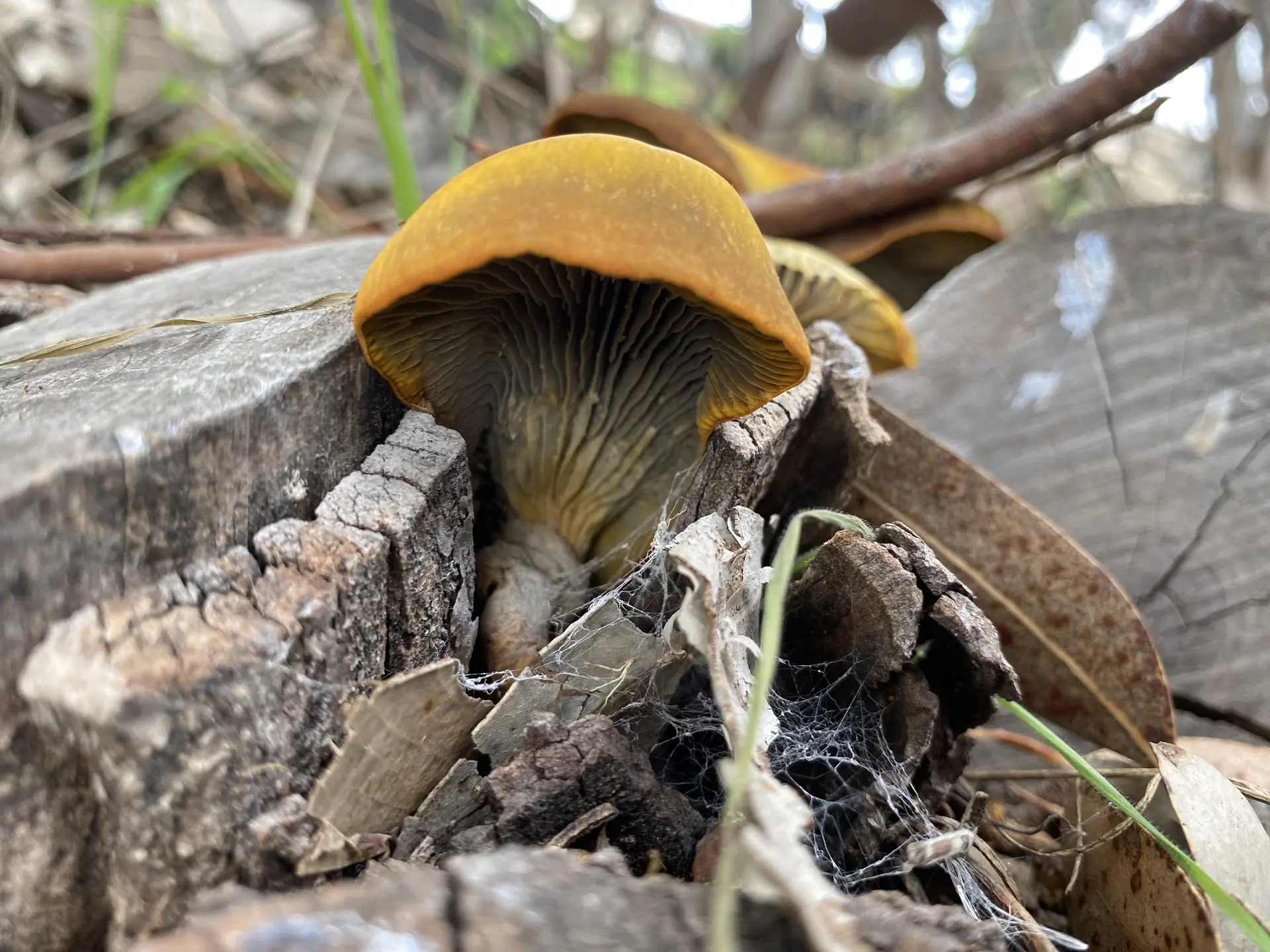
Western Jack O' Lantern
Omphalotus olivascens
Deeply decurrent yellowish gills • Olive-orange to bronze-orange cap • Dense clusters on hardwood stumps • Blade-like true gills • Yellow-orange internal flesh
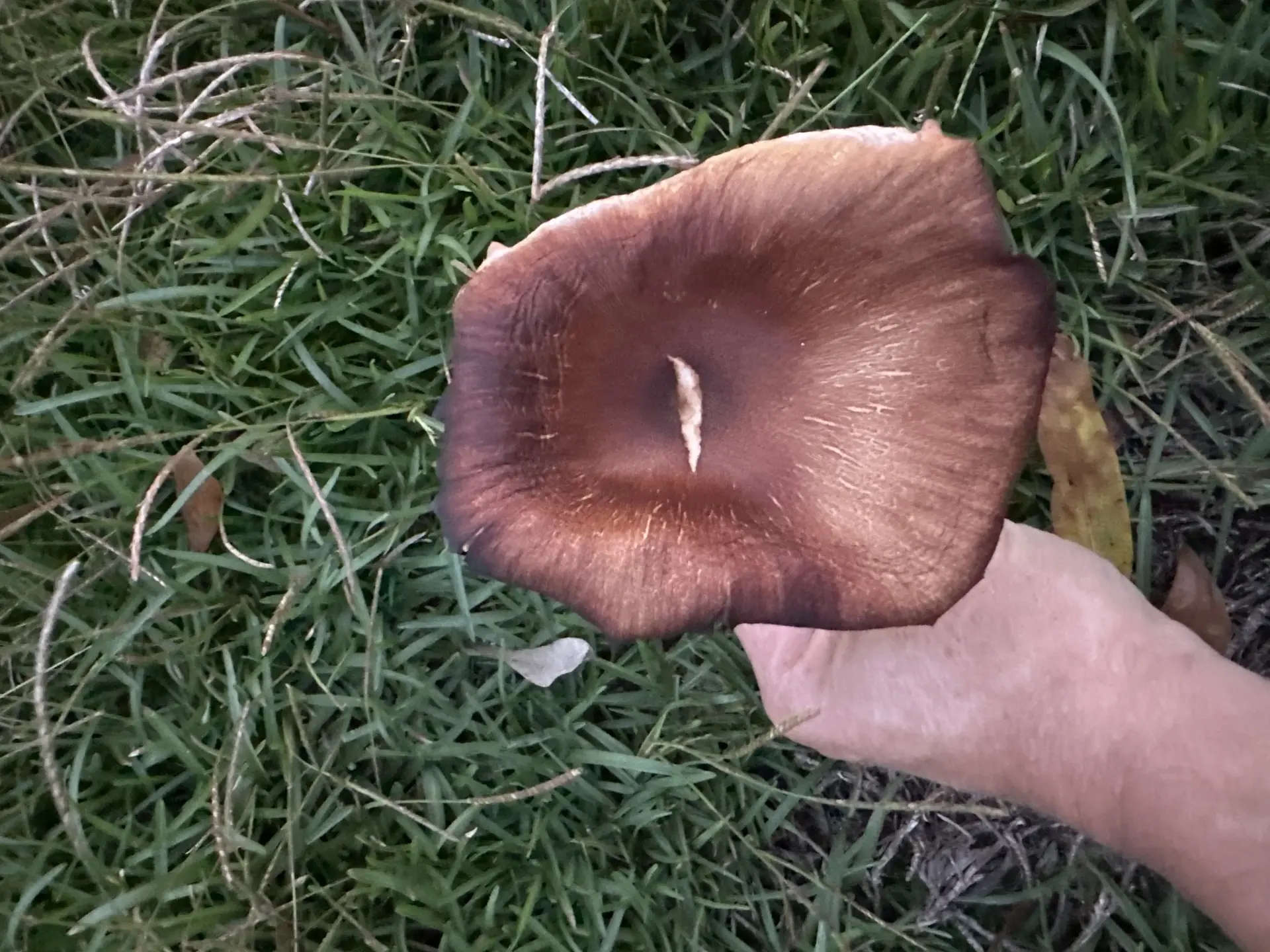
Brown Rollrim
Paxillus involutus
Cap dark reddish-brown • depressed center • often velvety or fibrillose. • Gills deeply decurrent • thick • widely spaced • rusty orange-brown. • Gills often cross-veined (anastomosing) near the stem. • Stem pale brown • curved • lacking a ring or volva. • Grows terrestrially in grass or soil • often near trees.
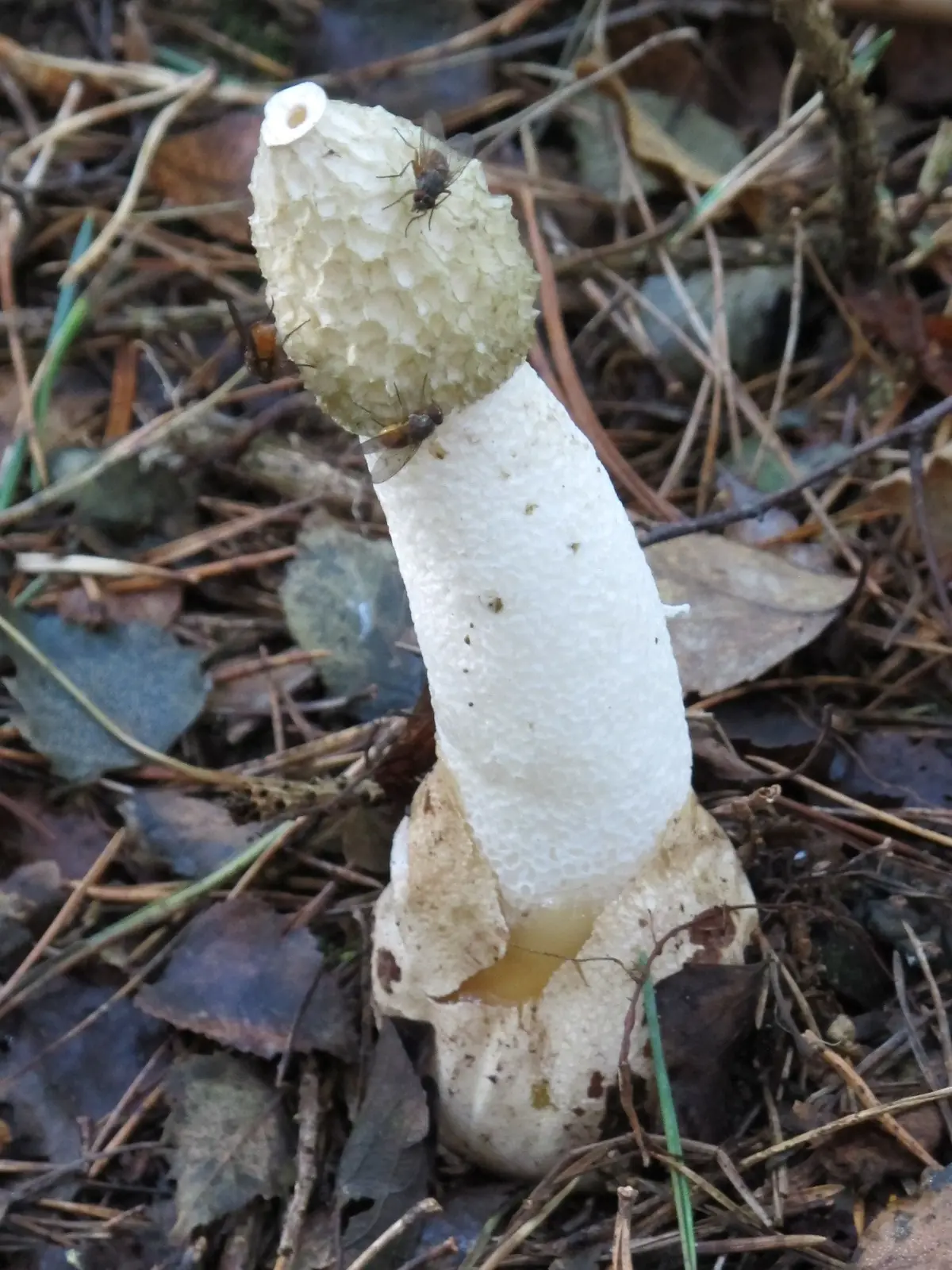
Common Stinkhorn
Phallus impudicus
Reticulated (pitted) conical head • Spongy • hollow white stalk • Gelatinous volva at the base • Strong • carrion-like odor • Presence of carrion-feeding insects