
False Tinder Conk
Phellinus igniarius
Identification of Phellinus igniarius (False Tinder Conk)
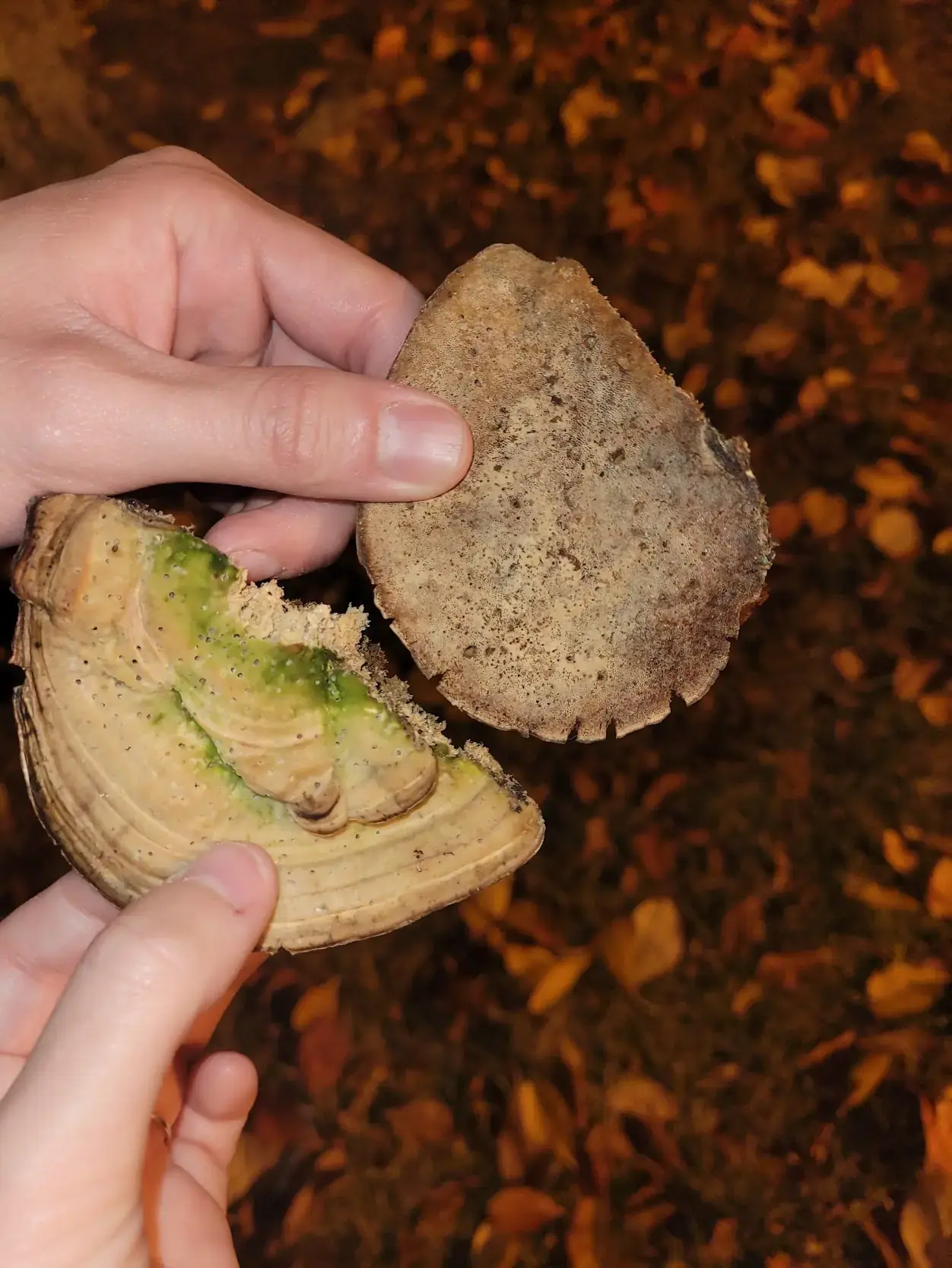
1 / 2
All Images (2)
Key Features
- Perennial
- woody
- shelf-like bracket structure
- Concentric growth rings visible in cross-section
- Rough
- brown to gray-black cap surface
- Pore surface tan to brown with minute pores
- Context often shows a distinct green layer (algal growth)
Color:
Brown (cap), Tan (pores), Yellow-brown/Green (context)
Smell:
Earthy or musty; not distinctive
Growth Pattern:
Single
Environment:
Wood (hardwood trees, living or dead)
Habitat & Distribution
Habitat:
Deciduous forest, growing on trunks or stumps
Distribution:
Widespread across North America, common in Maryland
Seasonality:
Perennial (year-round)
Economic Value
Market Demand:
Low - used historically for tinder and traditional medicine
Price Range:
N/A
Commercial Use:
None
Similar Species
Artist's Conk
Ganoderma applanatum
Key Differences:
- Pore surface bruises dark brown when scratched
- Context lacks the distinct green algal layer
Recommended Action
Do not attempt consumption; structure is woody and inedible.