Bamboo Stinkhorn
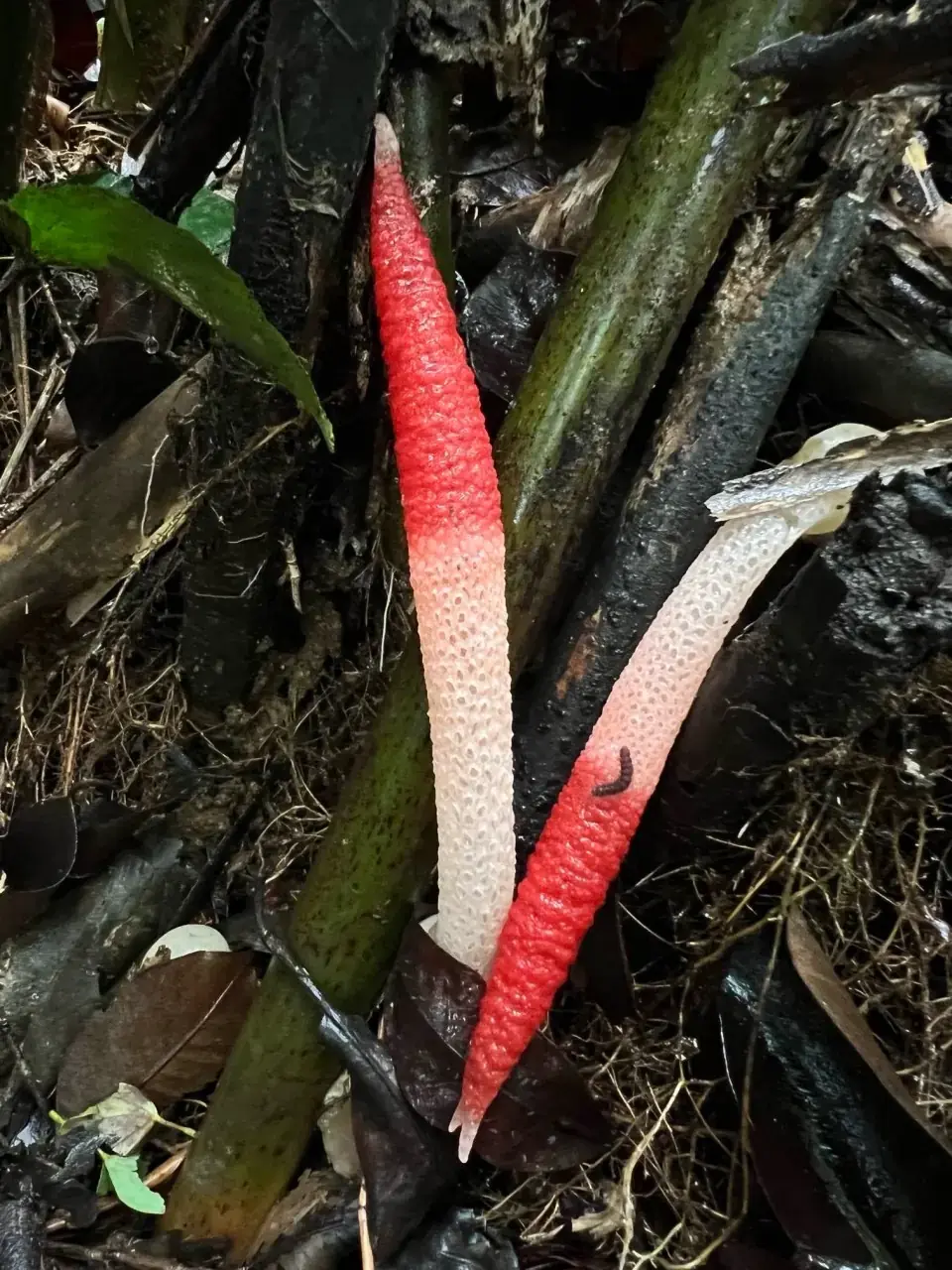
Mutinus bambusinus
Identification: Bamboo Stinkhorn (Mutinus bambusinus)
1 / 1
Key Features
- Cylindrical
- hollow
- tapering stalk (receptaculum)
- Vivid red to pinkish-red
- highly porous or pitted apex
- Pale pink or white lower stalk section
- Emerges from organic debris or soil
Color:
Red apex transitioning to pale pink/white stalk
Smell:
Foul, putrid odor when mature (due to gleba, not visible here)
Growth Pattern:
Single or scattered
Environment:
Leaf litter and decaying organic matter
Habitat & Distribution
Habitat:
Tropical forests, gardens, or areas with decaying wood/bamboo debris
Distribution:
Tropical and subtropical Asia (including Sri Lanka)
Seasonality:
Year-round in tropical climates, especially after rain
Economic Value
Market Demand:
None - foul odor and texture
Price Range:
N/A
Commercial Use:
None
Similar Species
Elegant Stinkhorn
Mutinus elegans
Key Differences:
- Often thicker stalk structure
- Apex color can be more orange or salmon
Columned Stinkhorn
Phallus rubicundus
Key Differences:
- Possesses a distinct, conical cap (pileus) structure
- Cap is covered in dark, slimy gleba when mature
Recommended Action
Do not consume. Observe only. Maintain distance due to potential odor.