Pyramid Amanita
Amanita pyramidifera
High-Risk White Amanita Species
1 / 2
All Images (2)
Key Features
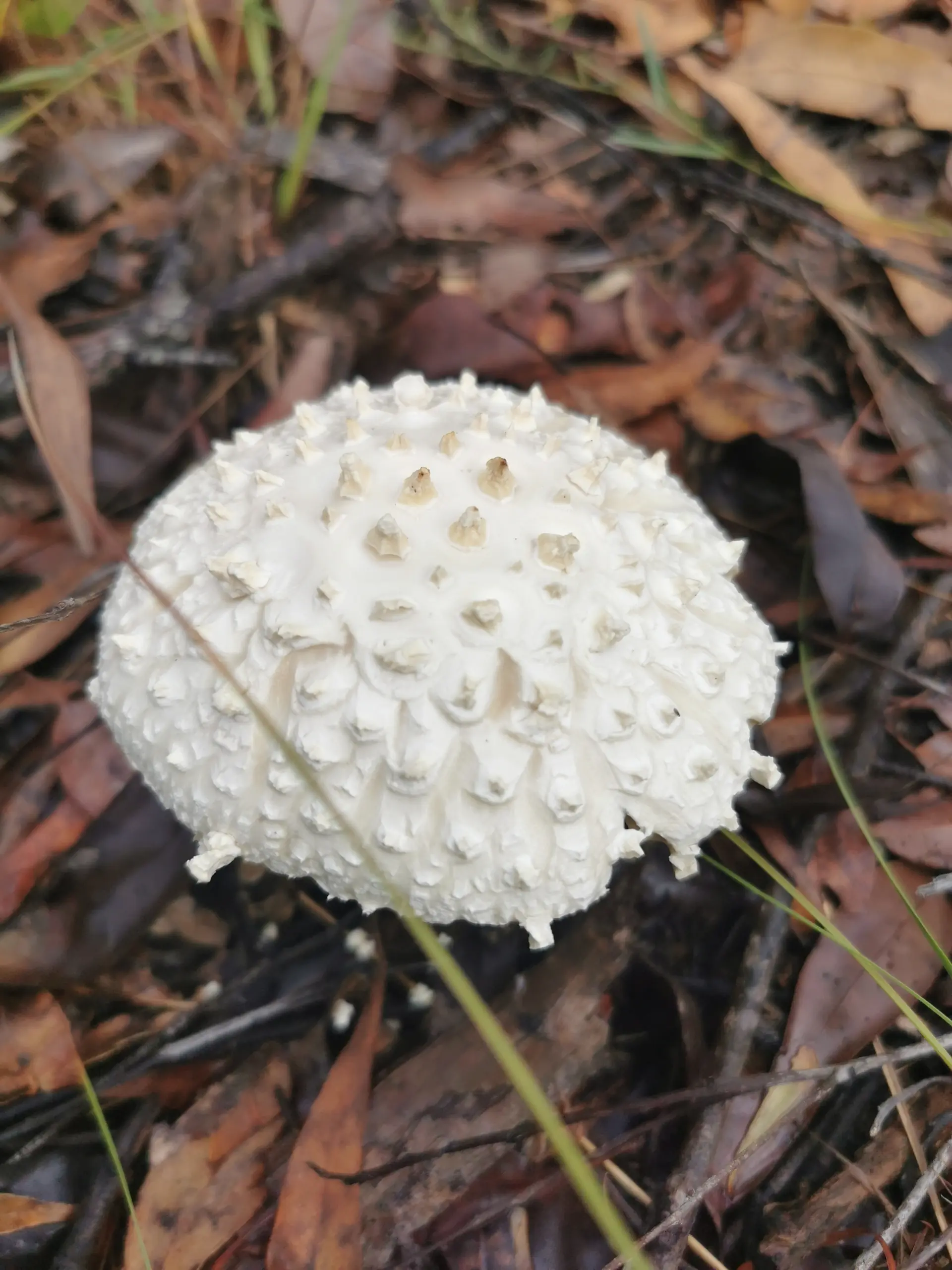
- White convex cap with sharp
- pyramidal warts
- White
- crowded gills free from the stem
- Thick white stem with a membranous partial veil
- Distinct bulbous base with friable volva remnants
Color:
White
Smell:
Unknown
Growth Pattern:
Single
Environment:
Leaf litter and soil
Habitat & Distribution
Habitat:
Eucalypt woodlands and native dry forests
Distribution:
Eastern Australia (Queensland and New South Wales)
Seasonality:
Summer to Autumn
Economic Value
Market Demand:
None - toxic
Price Range:
N/A
Commercial Use:
None
Toxicity Information
Symptoms:
- Severe gastrointestinal distress
- Nausea and vomiting
- Potential delayed organ toxicity
Onset Time:
Unknown, potentially delayed 6 to 24 hours
First Aid:
- Seek immediate medical evaluation if ingested
- Do not wait for symptoms to emerge
- Bring photographic evidence of the mushroom to the hospital
Emergency Contacts:
- 000
- Poisons Information Centre (AU): 13 11 26
Similar Species
Pineapple Amanita
Amanita ananiceps
Key Differences:
- Warts are generally softer and less strictly pyramidal
- Prominent veil remnants often hang from the cap margin
Death Cap (White Form)
Amanita phalloides
Key Differences:
- Cap is entirely smooth, lacking any warts
- Stem base features a distinct, loose, sac-like membranous volva
Recommended Action
Do not consume. Leave undisturbed in its natural environment.